


-
1 of 253523 objects
Bowl nineteenth century
Copper alloy | 24.0 x 24.0 cm (whole object) | RCIN 83820
-
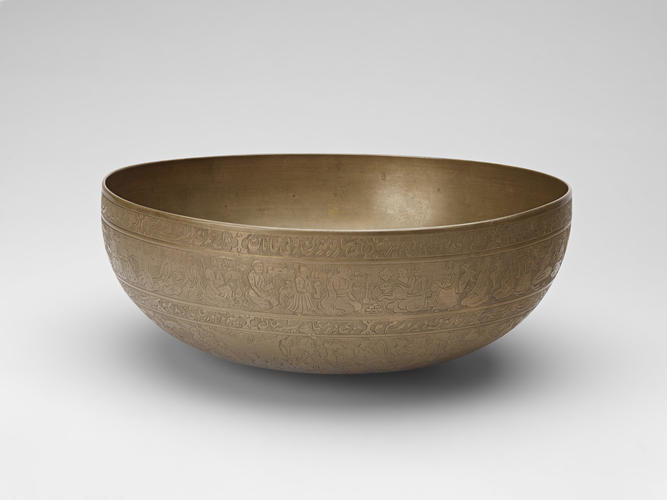
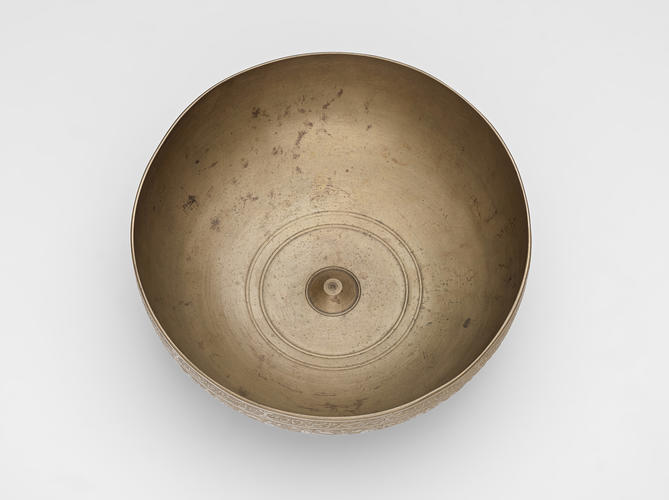
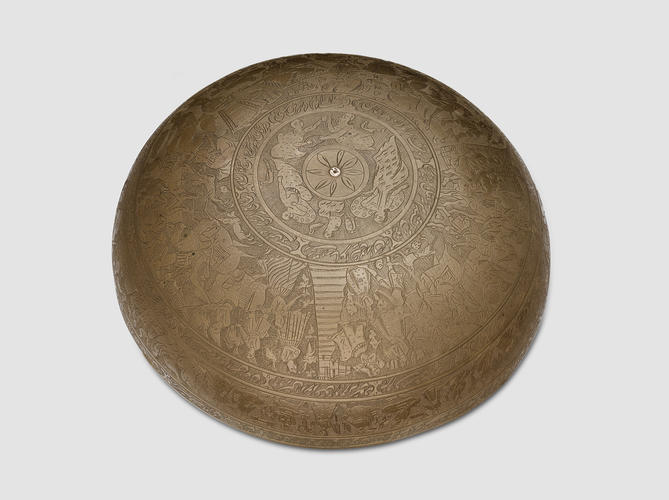
The incised decoration of the bowl's exterior is arranged in concentric bands of alternating epigraphic and figurative friezes. The epigraphic bands comprise verses by the eighteenth century Persian poet, and renowned promoter of bazgasht-e adabi, Hatef Esfahani. They are taken from the first stanza of his most famous work, the tarji-band poem on divine unity, yeki hast o hich nist joz ou. The verses refer to a festive Zoroastrian gathering in which the participants enjoy music and wine, a theme alluded to in the uppermost figurative band depicting musicians, cupbearers and men smoking galyan. The lower frieze comprises popular scenes from classical Persian literature, including Bahram Gur and Fitna, and Khusrow and Shirin, all depicted in Qajar dress.
Text adapted from L'Empire des Roses: Chefs-d'oeuvre de l'art persan du XIXe siècle (cat.entry: Emily Hannam, 2018).Provenance
Left by Mozaffar al-Din Shah after his residency at Marlborough House in August 1902.
Mozaffar al-Din Shah spent a week in London in August 1902 during which time he and his entourage resided at Marlborough House. This bowl is recorded as having been left behind after the visit and King Edward VII subsequently presented it to the royal family's museum at Osborne House.
-
Creator(s)
(nationality)


