


-
1 of 253523 objects
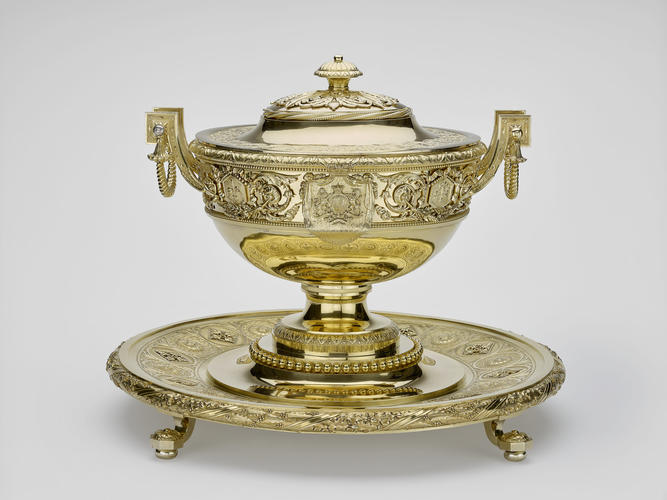
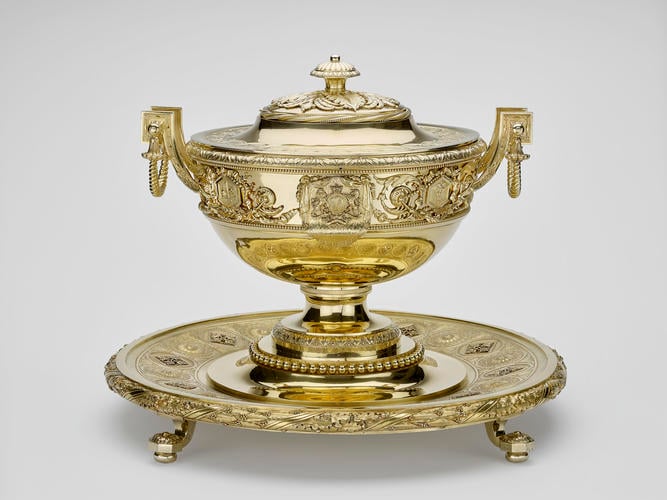
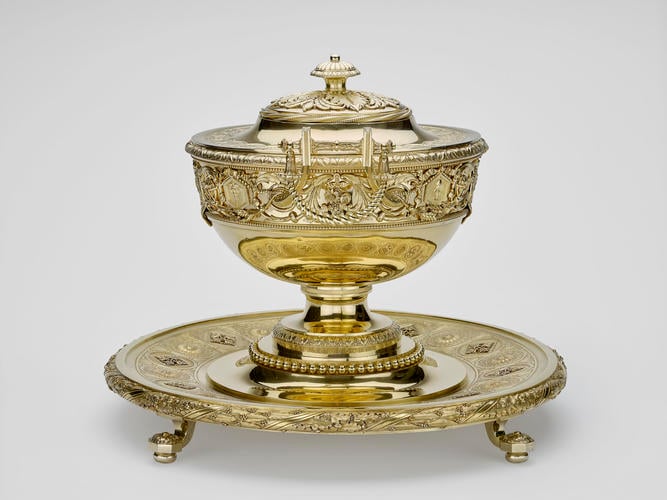
Tureen, stand and cover 1787
Silver gilt | 33.7 x 39.3 x 31.7 cm (whole object) | RCIN 51694
Henri Auguste (1759-1816)
51694.1.tif 1787
Henri Auguste (1759-1816)
51694.2.tif 1787
Henri Auguste (1759-1816)
51694.1 hexagon detail 4.tif 1787
Henri Auguste (1759-1816)
51694.2 side.tif 1787
Henri Auguste (1759-1816)
51694.1 hexagon detail 3.tif 1787
Henri Auguste (1759-1816)
51694.1 hexagon detail 2.tif 1787
Henri Auguste (1759-1816)
51694.1 hexagon detail 1.tif 1787
Henri Auguste (1759-1816)
51694.1 detail of stand.tif 1787
Henri Auguste (1759-1816)
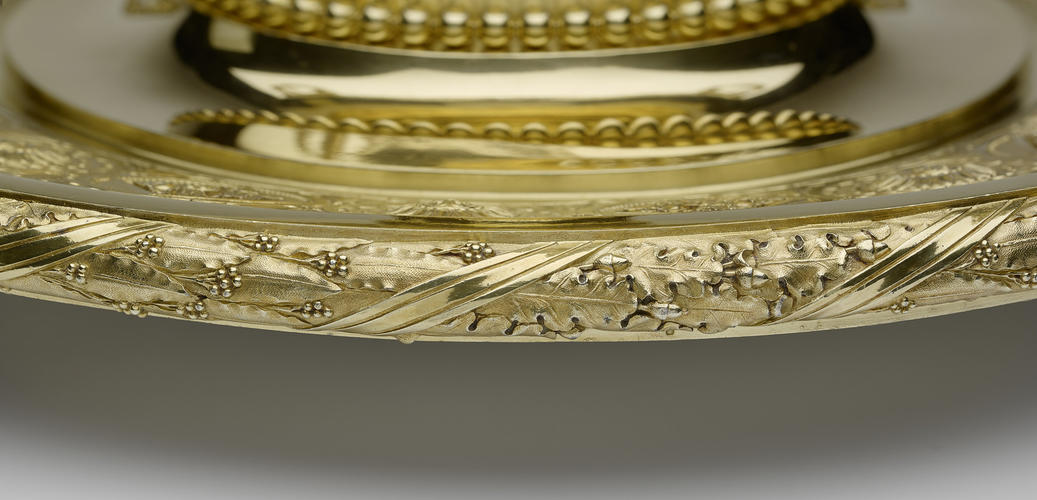
51694.1 detail of stand border.tif 1787
Henri Auguste (1759-1816)
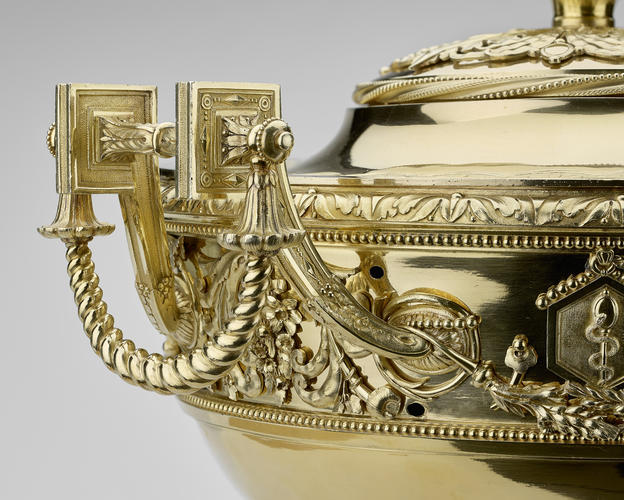
51694.1 detail of handle.tif 1787
Henri Auguste (1759-1816)
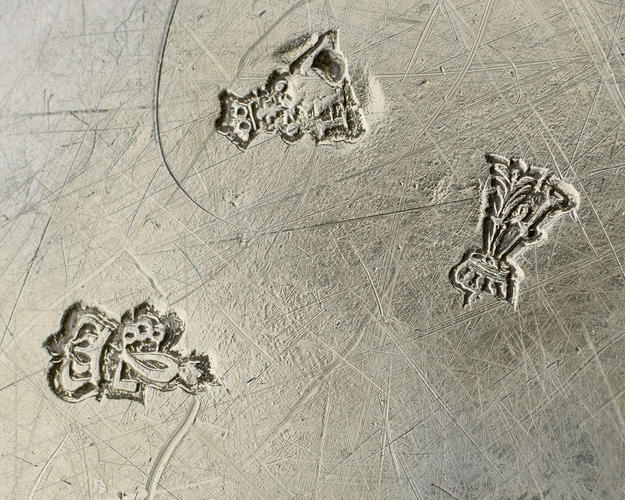
51694.1 marks on base of liner.tif 1787
Henri Auguste (1759-1816)
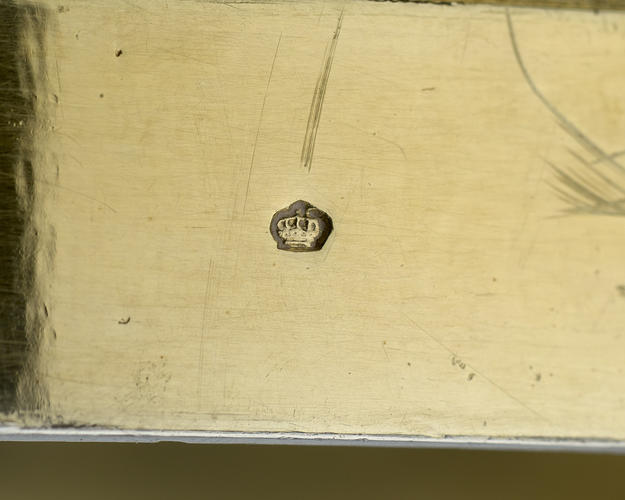
51694.1 mark on foot.tif 1787
-
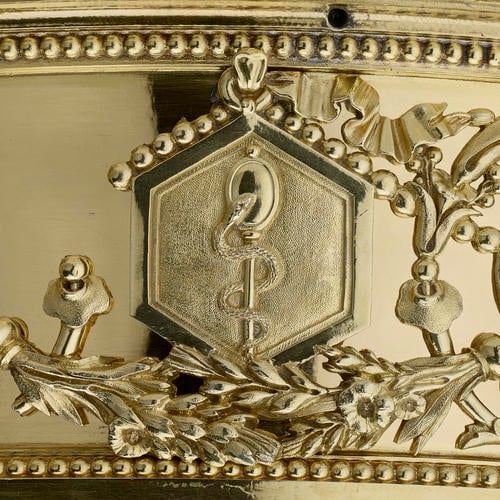
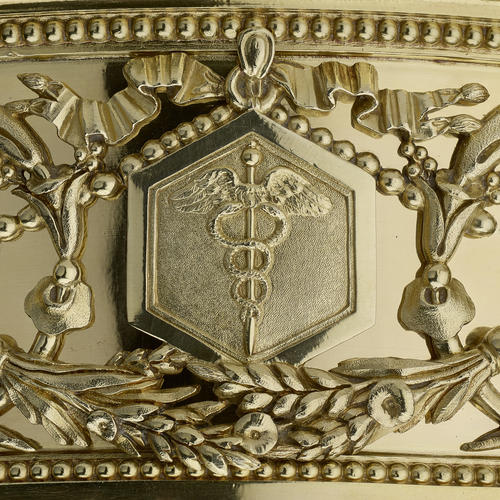
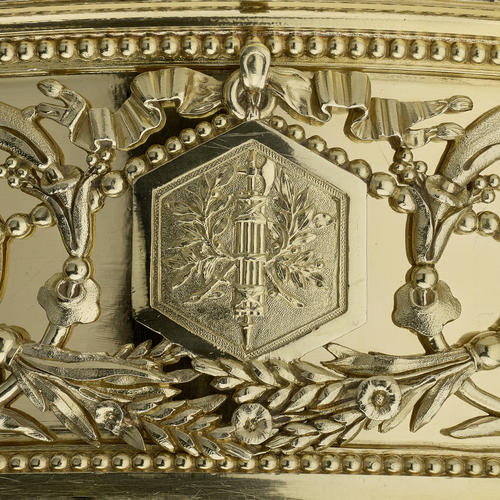
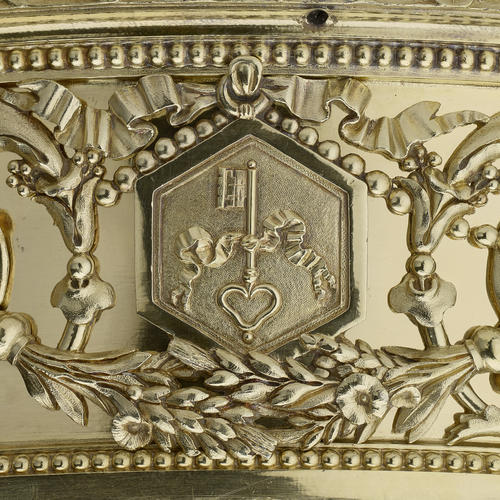
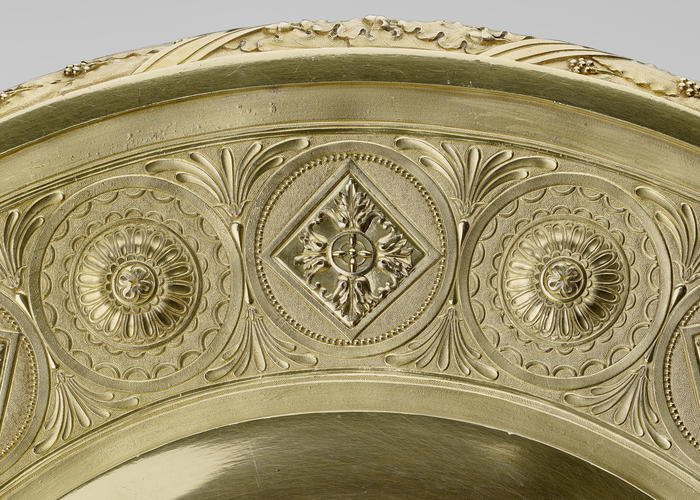
The hemispherical tureen has a circular stand on four scroll legs with bun feet, the border embossed and chased with roundels and lozenges, with a cast berried laurel border and beaded rim. The tureen has a domed foot chased with a leaf and dart border, plain stem and lower bowl; the frieze is cast with a band of scrolling acanthus leaves and hexagonal shield-like plaques with beaded swags and ribbons, with applied coats of arms with mantling, to front and back; the angular, Greek-key like handles chased with trails of husks, have ropework loops and pendant bell-flower terminals. The domed cover has a broad flat border with acanthus foliage; the dome has an applied band of entwined beaded and matt strands; the gadrooned finial rises from a calyx of flattened acanthus leaves and arrows. The tureen has a plain liner.
Henri Auguste was the son of the royal goldsmith Robert-Joseph Auguste (1723–1805), whose workshop he assumed in 1784–85. Henri managed to bridge the period between Louis XVI and Napoleon both politically and artistically. For the latter's coronation as Emperor in 1804 he received a commission from the City of Paris, for a silver service comprising 425 pieces, most of which were melted down after the restoration under Charles X. The service included hemispherical tureens of this type with a frieze of scrolling acanthus, distinctive flat covers and serpent handles, to which Napoleonic insignia and large figural finials were added. Henri built on the celebrated reputation of his father, often reusing designs from his father's workshop. The design for the stands with a border of circular discs, for example, is taken from the stands made for the pots à oille which formed part of a service ordered from Robert-Joseph by the Swedish court in 1775.
The original commission for the tureens came from Tommaso di Somma, Marchese di Circello (1737-1826), ambassador for the Kingdom of the Two Sicilies, who was envoy to Paris from 1786 until 1793. The ambassador ordered a dinner service from Auguste, including two pairs of tureens – two circular and two oval. In 1795 Somma was posted to London for five years. On his departure he consigned his plate for sale and it was acquired by Rundell, Bridge & Rundell, who sold on the circular tureens to George III, adding the Royal arms at that date.
Henri Auguste also worked directly for members of the royal family, producing a dinner service and candelabra for Frederick, Duke of York in 1789.
Tureens and liners struck with city mark of Paris (1787) and maker's mark of Henri Auguste; base with duty exemption mark.Provenance
Made for Tommaso di Somma, Marchese di Circello, 1787; sold Christie's, London, 11 November 1810, lot 38; purchased by Rundell, Bridge & Rundell (£148 3s.); by whom sold to George III (Rundells 1832, p.86).
-
Creator(s)
(goldsmith)(retailer)(nationality)Acquirer(s)


