


-
1 of 253523 objects
After Louis François Roubiliac (1695-1762)
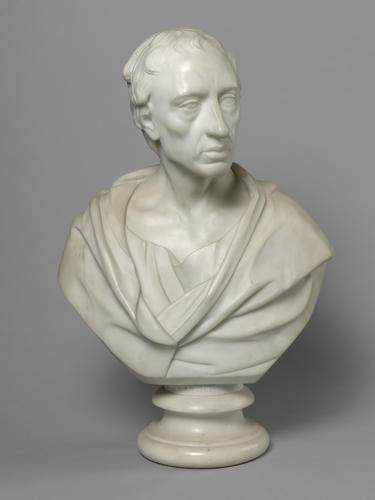
Alexander Pope (1688-1744) late eighteenth or early nineteenth century
Marble | 68.0 x 46.0 x 24.0 cm (whole object) | RCIN 45173
-
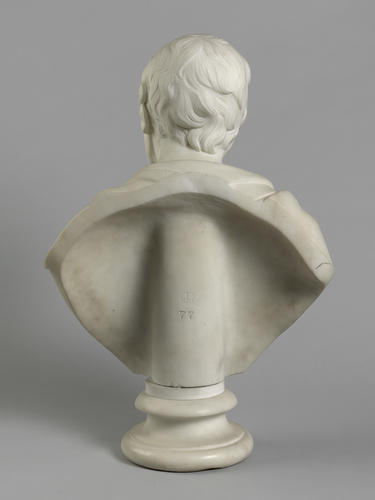
White carrara marble bust of Alexander Pope with drapery around shoulders, head turned to the left; on turned socle; standing on circular ebonised pedestal base with moulded foot. In this bust the eighteenth century English poet and satirist Alexander Pope is portrayed wearing classical dress. Famous for carrying out the first translation of Homer’s large work, the Iliad, from classic Greek into English, this bust pays tribute to Alexander Pope as man of letters and classical scholar. This depiction of Alexander Pope is attributed to the French sculptor Louis-Francois Roubiliac who worked in England and who is known to have made four signed busts of Alexander Pope. In the eighteenth century there was a high demand for representations of important classical and contemporary literary figures to be displayed in domestic interiors, galleries and libraries. Bust copies like this one, based on originals by prominent artists like Roubiliac, became quite popular and were often made after plaster samples that the famous artist kept in his studio. Thought to have been acquired by King George IV, this bust of Alexander Pope was displayed in the Grand Corridor at Windsor Castle. The bust stood alongside other commemorative representations of great historic and contemporary English figures and it was displayed facing a bust of William Shakespeare.
-
Creator(s)
Acquirer(s)
-
Medium and techniques
Marble
Measurements
68.0 x 46.0 x 24.0 cm (whole object)
33.5 x 26.0 x 26.0 cm (stand)
Category
Object type(s)


