


-
1 of 253523 objects
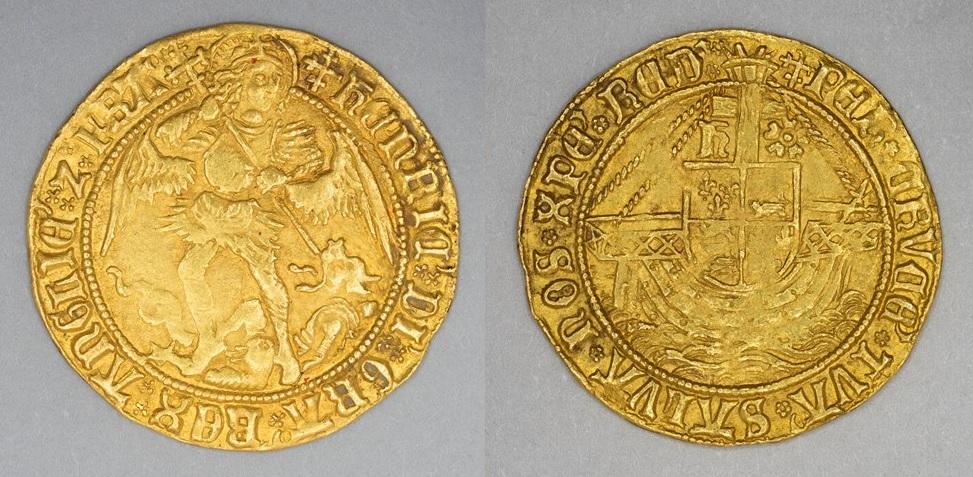
Angel of Henry VII, class IV. 1485 - 1509
2.84 cm (diameter) | RCIN 443056
London Mint
England. Henry VII, Angel, class IV 1485 - 1509
London Mint
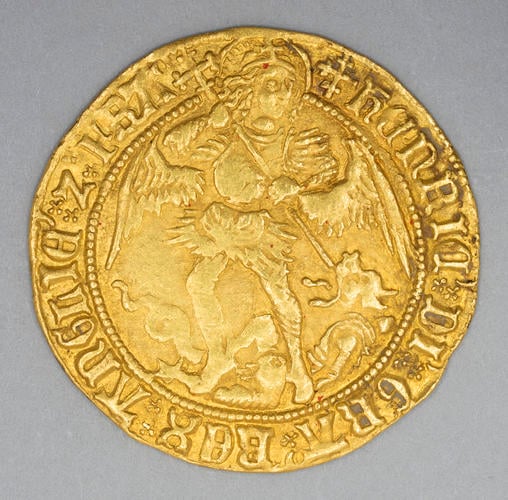
England. Henry VII, Angel, class IV 1485 - 1509
London Mint
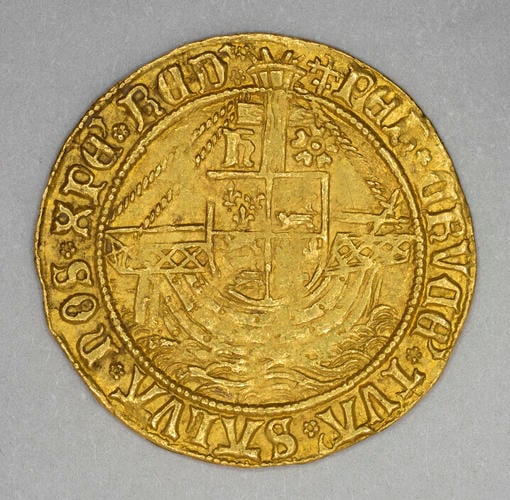
England. Henry VII, Angel, class IV 1485 - 1509
-
Touchpiece used in the ceremony of 'Touching for the King's Evil', a disease of the lymph glands, also known as scrofula, which was popularly believed to be cured if the monarch touched the sufferer. The custom began in France under the crusader-king, St Louis IX (1226-70). When Edward III of England (1327-77) laid claim to the throne of France as the surviving grandson of Philip IV, through his mother Isabella, he also began touching for the King's Evil.
Each sufferer was given a token or touchpiece, pierced so that it could be worn on a ribbon round the neck. From the reign of Edward IV this was usually an angel, a gold coin worth 6s 8d, depicting St Michael slaying the dragon on one side, and a ship under sail on the other. The angel continued as a currency issue until the reign of Charles I, but was not revived after the Restoration. However, gold tokens, still depicting St Michael and the ship, were produced specifically for those touched by Charles II and James II. William and Mary declined to perform the ceremony, but Queen Anne revived it. Although the Hanoverian kings did not continue the custom, the Jacobite Stuarts did, but their touchpieces were silver.
The design on the Angel and medallic touchpieces of St Michael killing a dragon referred to St Michael casting Satan, symbolised by the dragon, out of heaven. The device was originally used to represent the defeat of the House of Lancaster and the accession of Edward IV of York in 1461, and then came to symbolise the triumph of good over evil, referring to the healing process. The ship design on the angel represented the ship of state, with a central mast resembling Christ’s Cross. Struck in the reign of Henry VII, illustrating how the design of St Michael and the dragon on the obverse evolved over successive reigns. The reverse shows a ship surmounted by the Royal Arms and a cross, with H and a rose beside it. The silver penny was replaced in the reign of Henry VII with a gold coin known as an Angel, pierced and threaded on a ribbon, and it was supposed that wearing the Angel, or ‘touch-piece’, would prevent the disease from recurring.
Provenance
Purchased in 1933 as an example of a touch piece (a coin given to a person who had been touched by the Sovereign as a cure for scrofula).
-
Creator(s)
(mint)Acquirer(s)
-
Medium and techniques
Measurements
2.84 cm (diameter)
5.20 g (Weight) (whole object)
Other number(s)
Alternative title(s)
England. Henry VII, Angel, class IV.


