


-
1 of 253523 objects
Antonio Canova (1757-1822)
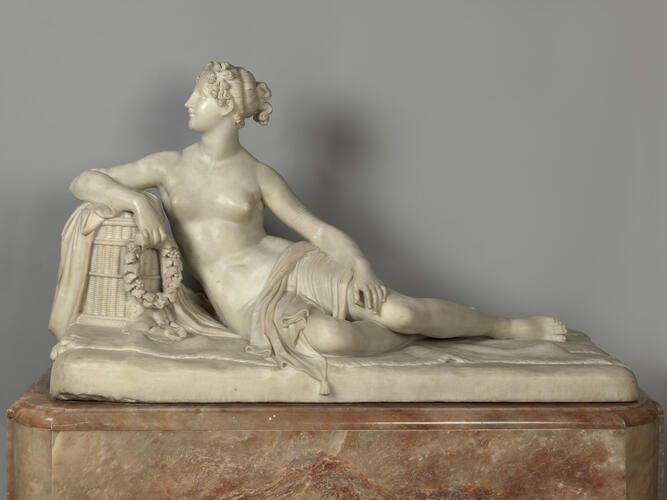
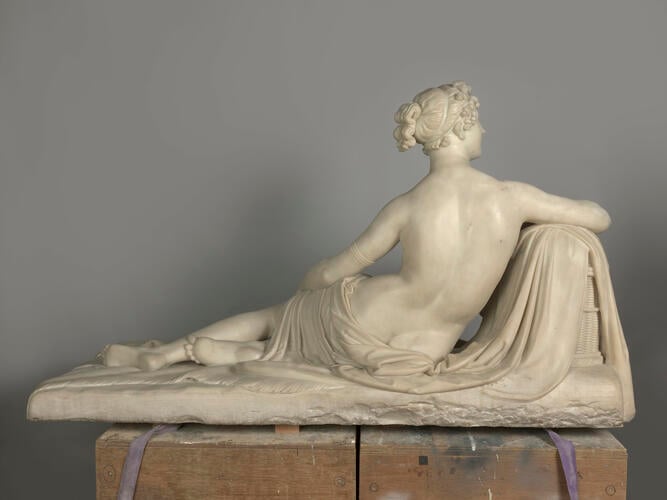
Dirce 1820-24
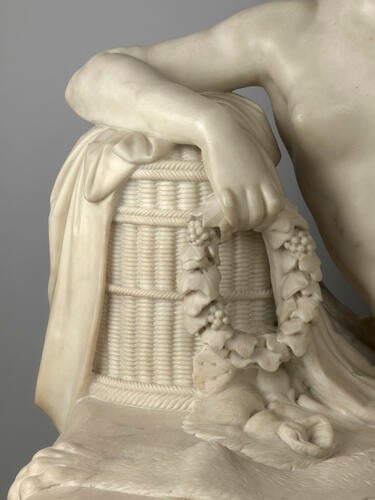
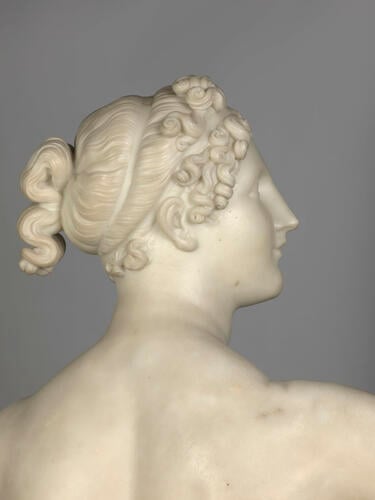
Marble | 96.0 x 175.0 x 78.0 cm (whole object) | RCIN 2042
Grand Entrance & Marble Hall, Buckingham Palace
-
Having secured for Carlton House the Naiade giacente, George IV sought for her a companion. Charles Long wrote to Canova in February 1820 about a statue of another nymph, Dirce, which Francis Chantrey had described to him, having seen the plaster model in Canova's studio. Long had also seen a drawing of the statue by Thomas Lawrence 'which I found infinitely pleasing'. Long asked if it was the same size as the Naiade, and if it would make a good pendant. Long responded that it would, and wrote again on 25 April to confirm the prince's order. In the summer of 1820 Lawrence wrote to Canova of his delight that Dirce was to come to Carlton House. Dirce was unfinished at Canova's death and was listed in a catalogue of the works of Cincinnato Baruzzi (1796-1878) who completed her. .
Dirce was one of the nymphs of Mount Nysa who nurtured the infant Bacchus, the wife of Lycus and sister-in-law of the Theban princess Antiope. Her sons Amphion and Zethus order their mother's death, after which she was thrown into a stream which bore her name. A related Farnese group features a beehive of woven rush which Canova may have remembered when designing his statue.
The presence of a second nymph by Canova in the Royal Collection testifies to the sculptor's talent for promoting sales of his work to established clients. Having commissioned the colossal group of Mars and Venus and pre-empted Lord Cawdor in the purchase of the Ninfa delle fontane, George IV remained anxious to secure a version of the Three Graces for the centre of the Circular Room at Carlton House.
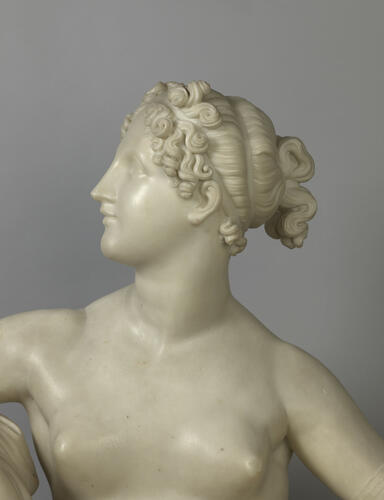
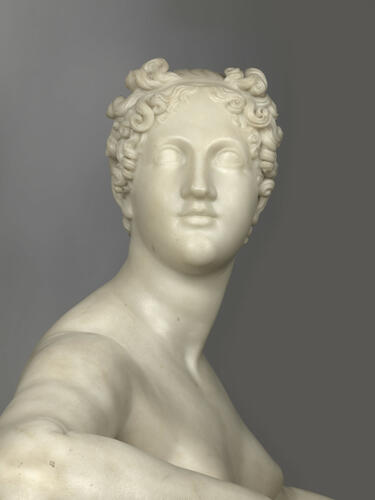
In a letter to the sculptor, Lawrence described the plaster model (which he had seen in Rome) as 'the most perfect of your productions'. However, the turn of the head creates such an awkwardness in the pose of the figure as she leans weightlessly against a draped beehive that it suffers by comparison with the true touchstone among Canova's reclining nudes, the Borghese Venere vincitrice. The completed statue was sent to England in 1824 with the Mars and Venus, and installed at Carlton House by Westmacott. In August 1825 William Richard Hamilton, the British Minister at Naples who had played a leading part in the post-war negotiations over the return of looted ancient sculpture to Rome, wrote to Sir Charles Long on behalf of the Abbate Canova, the sculptor's brother and executor, accepting (without complete satisfaction) the offer of 5,000 guineas in payment for the two groups delivered in the previous year. Hamilton wrote that the Abbate was none the less 'highly flattered that these his brother's latest finished works, should be deposited in the palace of the King of Great Britain, to whom he considers himself, as his brother did during his lifetime, so mainly indebted for the halo of glory which shed fresh lustre over Canova's last days'.
Catalogue text adapted from Royal Treasures, A Golden Jubilee Celebration (2002) and Sculpture in the Collection of His Majesty The King (2025).Provenance
Purchased by George IV from the sculptor, 1824 (5,000 guineas, together with Mars and Venus). Received at Carlton House 10 April 1824 and placed in the Temporary Conservatory. Later stored by the sculptor Francis Chantrey in Eccleston Street, London, 1826-28.
Later installed in the Picture Gallery, Buckingham Palace, and moved to the Marble Hall, Buckingham Palace, by 1914. -
Creator(s)
(sculptor)Acquirer(s)
-
Medium and techniques
Marble
Measurements
96.0 x 175.0 x 78.0 cm (whole object)
Category
Object type(s)


