


-
1 of 253523 objects
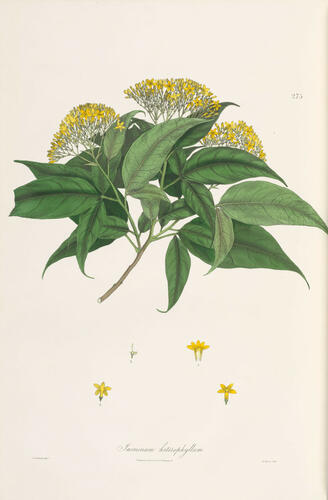
Plantae asiaticae rariores; or, descriptions and figures of a select number of unpublished East Indian plants. Volume 3, containing plates CCI-CCC / by Nathaniel Wallich 1832
23.5 x 5.5 cm (book measurement (inventory)) | RCIN 1071009
-
Nathaniel Wallich was a Danish botanist active in India in the early nineteenth century. He arrived in India in 1807 with the Danish East India Company. He was then imprisoned following Britain’s capture of the Danish colony of Frederiksnagore (Serampore) but was released in 1809, after which he spent several years travelling and studying Indian flora.
In 1814, he joined the British East India Company as an assistant surgeon but soon left to take up the post of superintendent of the newly founded Indian Museum in Calcutta (Kolkata), donating many specimens of plants to its growing collection. Two years later, he was able to apply his botanical knowledge in the Royal Botanic Garden in Calcutta, where he remained until his retirement in 1846. In 1822, he travelled to Singapore to design the city’s botanical gardens and in 1828, he took an extended break from his career in India to visit Britain in order to supervise the colouring of the plates for this book, his Plantae Asiaticae Rariorum.
The work was a survey of rare plants studied by Wallich in India, with plates made by the Maltese lithographer Maxim Gauci. The majority of the watercolours used by Gauci were painted by the Indian artists Gorachand and Vishnupersaud, with others made by British botanical artists including William Griffith, Charles Curtis and Sarah Drake. It was published in 12 parts between 1829 and 1832. -
Creator(s)
(publisher)(publisher)(printer)(lithographer) -
Measurements
23.5 x 5.5 cm (book measurement (inventory))


