


-
1 of 253523 objects
The Herball, or, Generall historie of plantes 1636
RCIN 1057110
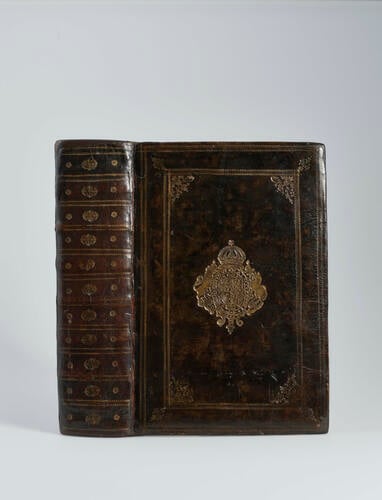
John Gerard (1545-1612)
The Herball, or, Generall historie of plantes, gathered by John Gerarde of London, Master in Chirurgerie . . . enlarged and emended by Thomas Johnson . . 1636
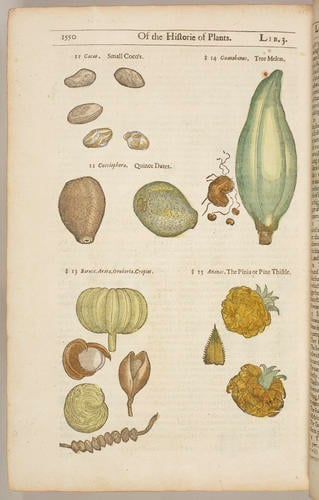
John Gerard (1545-1612)
The Herball, or, Generall historie of plantes, gathered by John Gerarde of London, Master in Chirurgerie . . . enlarged and emended by Thomas Johnson . . 1636
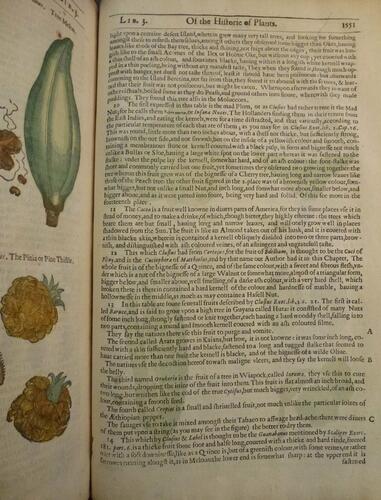
John Gerard (1545-1612)
The Herball, or, Generall historie of plantes, gathered by John Gerarde of London, Master in Chirurgerie . . . enlarged and emended by Thomas Johnson . . 1636
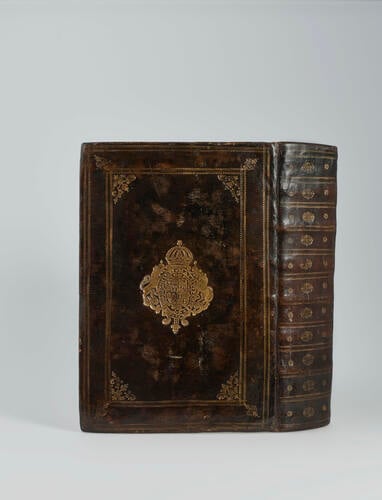
John Gerard (1545-1612)
The Herball, or, Generall historie of plantes, gathered by John Gerarde of London, Master in Chirurgerie . . . enlarged and emended by Thomas Johnson . . 1636
-
This is the most famous of British herbals – a book dedicated to recording and describing the properties of medicinal plants, usually produced for a scholarly audience. First published in 1597 with text and illustrations combined from many sources, it was written by John Gerard, a surgeon from Cheshire based in London. Gerard was also a gardener, managing his own gardens and those belonging to William Cecil, Lord Burghley. Thanks to his local knowledge, his anecdotes of his gardening successes and failures, and stories from those he met on his travels, his book was a popular addition to many libraries.
This is a 1636 reprint of the revised 1633 edition, edited by Thomas Johnson. An apothecary who was a more scholarly amateur botanist than Gerard, Johnson produced a very different version of the Herball to his predecessor. He included 800 new plant species and replaced the illustrations, which had in some cases been mislabelled. He added many asides, indicated by printer's marks, clarifying and correcting Gerard's text.
In this copy of Johnson's update of Gerard's work, both the woodcut illustrations of plants, and the engraved frontispiece, have been hand-coloured. The Royal Arms of Charles I are stamped in gold onto the covers. While there is no other evidence to confirm that this copy was the king's, ownership of the latest edition of this book would fit in well with Charles's known interests. The book was presented to King George VI in 1950 by Erica Marx, daughter of the book collector Hermann Marx, on the understanding that it was a royal copy.
Included among the plants represented in this herbal is cacao, or chocolate, which was new to Europe, and the description of the bean is less than enthusiastic: 'The cacoa is a fruit well knowne in divers parts of America, for they in some places use it in stead of money, and to make a drinke, of which, though bitter, they highly esteeme … the fruit is ... of an astringent and ungratefull taste.'
Also to be found is a description of the potato, which was newly introduced to Europe. Gerard describes successfully growing a potato plant in his own garden, explains how the vegetable could be eaten, and outlines its perceived medicinal properties. Thomas Johnson added a note to record that at one point potatoes were banned in Burgundy, for fear they were a cause of leprosy.
Gerard gives the rose high importance in his book, highlighting its symbolic link to royalty. He recounts a tale of a ploughed field spontaneously growing roses year after year, but the later editor Thomas Johnson points out that they must have been poppies. Johnson is also scornful of Gerard's witness accounts of the barnacle goose, where driftwood is thought to grow goose eggs. A traditional explanation for how barnacle geese produce young at a time when migration of birds was not widely understood, Johnson debunks the myth with a more scientific account of the geese having been observed laying and hatching eggs on remote islands.
Although Thomas Johnson's alterations add more scientifically researched descriptions at a time when Britain was on the cusp of a scientific enlightenment, the Herball's enduring appeal lies in John Gerard's engaging text, full of personal accounts, and not immune to folklore.Provenance
Presented to King George VI by Erica Marx in December 1950. The Royal Arms of Charles I are on front and back boards: the book may have originally belonged to him.
-
Creator(s)
Acquirer(s)
-
Other number(s)
ESTC : English Short Title Catalogue System Number – ESTC S122175Alternative title(s)
The Herball, or, Generall historie of plantes, gathered by John Gerarde of London, Master in Chirurgerie ... enlarged and emended by Thomas Johnson ...


