


-
1 of 253523 objects
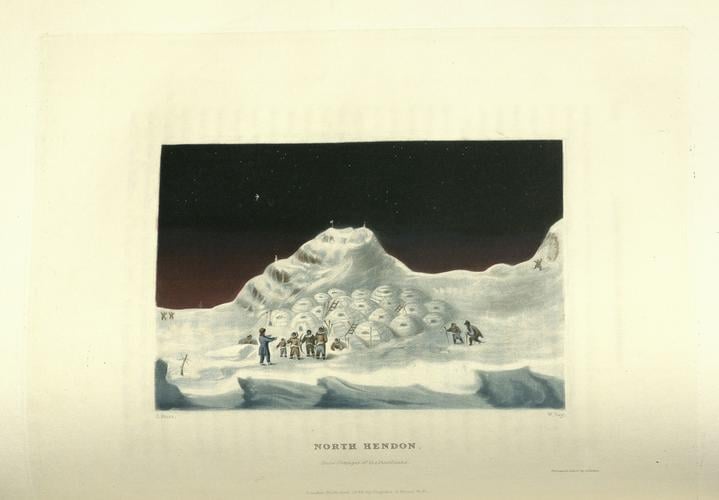
Narrative of a second voyage in search of a North West Passage and of a residence in the Arctic regions during the years 1829, 1830, 1831, 1832, 1833 / by Sir John Ross ; including the reports of...Captain James Clark Ross.... 1835
RCIN 1024387
Sir John Ross (1777-1856)
Narrative of a second voyage in search of a North West Passage and of a residence in the Arctic regions during the years 1829, 1830, 1831, 1832, 1833 / by Sir John Ross ; including the reports of. . . 1835
-
In an attempt to salvage his reputation following the events of his first voyage to the Canadian Arctic in 1818 where he witnessed a mirage and charted the sight as a mountain range, Sir John Ross began to petition the Admiralty to arrange another expedition to the region. The Admiralty was uninterested, particularly following a subsequent voyage by William Parry in 1819, which proved that Ross's 'discovery' was false.
However, Ross was able to gain the sponsorship of a businessman, Felix Booth, to undertake a new expedition. The expedition left London in May 1829 and by August had successfully navigated well into the Canadian Arctic, where several features were named after Booth. However, as winter approached, the expedition was forced to winter on the Boothia Peninsula (now part of Nunavut) where they were met by a group of Netsilik Inuit. In his published account of the journey, Ross provides an interesting description of the encounter and describes how the ship's carpenter fashioned a wooden leg for Tulluahiu, one of the Inuit hunters.
The expedition was also notable for being the first to reach the North Magnetic Pole, and for the discovery of several islands in the James Ross Strait, between the Boothia Peninsula and King William Island. Ross's nephew, James Clarke Ross (who would become a famous Polar explorer in his own right) observed three islands in the strait and named them the Beaufort Islands after the hydrographer Francis Beaufort. Upon the expedition's return to England in 1833, Ross and Beaufort approached William IV to rename the group the Clarence Islands after the King's former title, William having succeeded his brother, George IV, in 1830. The King accepted, and each of the islands was named after one of his three illegitimate sons. This was an acceptable practice at the time: Ross was leader of the expedition and had the right to name new landmasses. However, he went even further, and added six totally fictional islands to the grouping so that each of the King's illegitimate daughters would also have something named after them.
Bound in red goatskin with gold tooling and the arms of William IV on both boards. -
Creator(s)
(contributor)(publisher) -
Category


