

-
1 of 253523 objects
Taamra Iyasus ተአምረ ኢየሱስ (The Miracles of Jesus) c.1725
Ink and opaque watercolour on vellum | 34.5 x 29.5 cm (whole object) | RCIN 1005079
Ethiopia
Taamra Iyasus ተአምረ ኢየሱስ (The Miracles of Jesus) c.1725
Ethiopia
Taamra Iyasus ተአምረ ኢየሱስ (The Miracles of Jesus) c.1725
Ethiopia
Taamra Iyasus ተአምረ ኢየሱስ (The Miracles of Jesus) c.1725

-
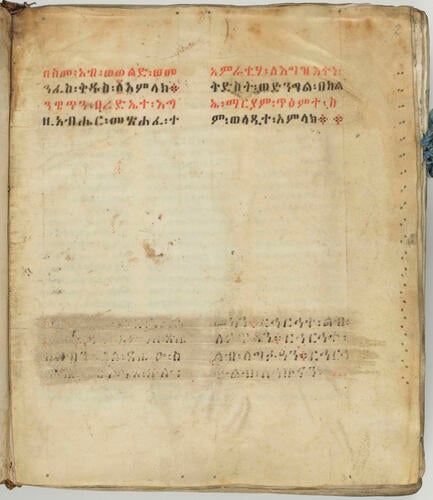
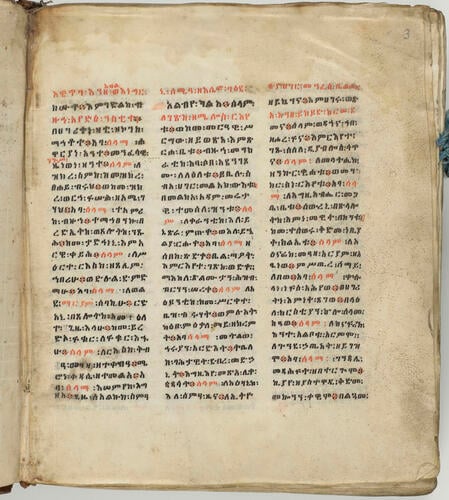
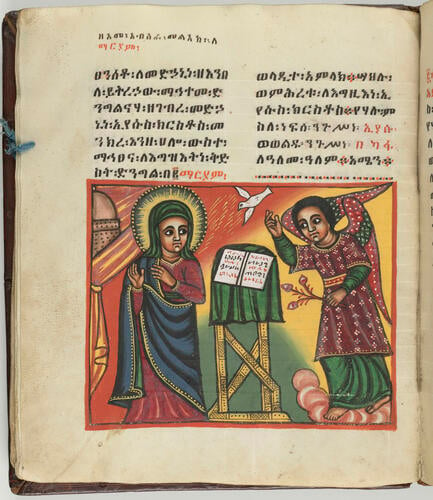
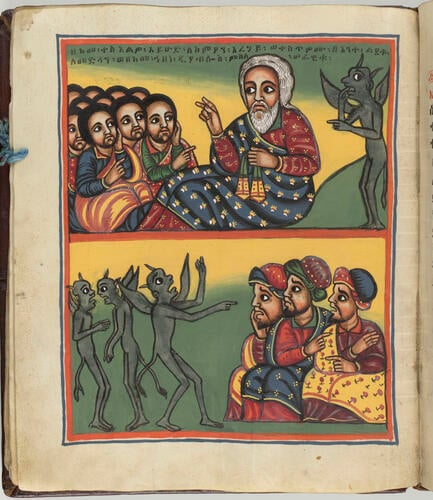
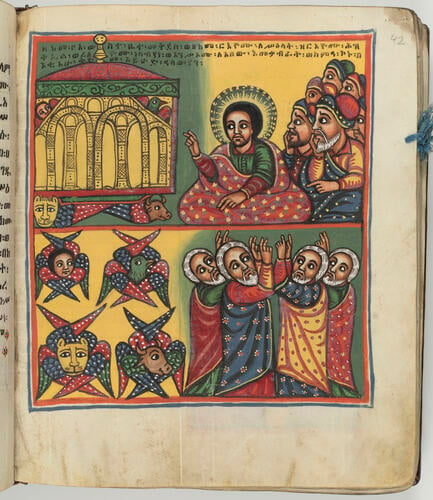
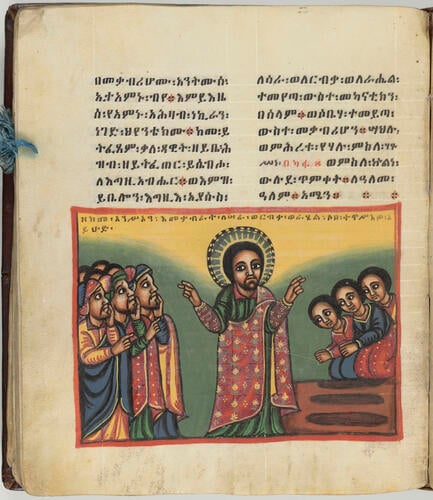
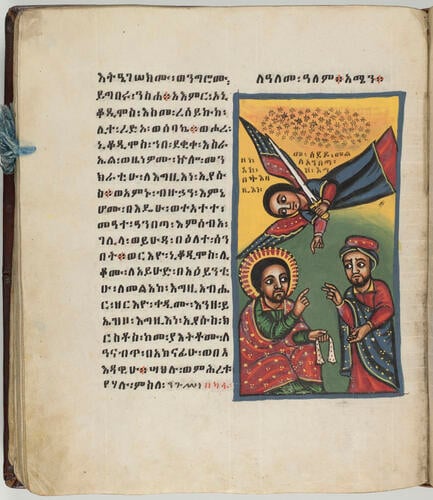
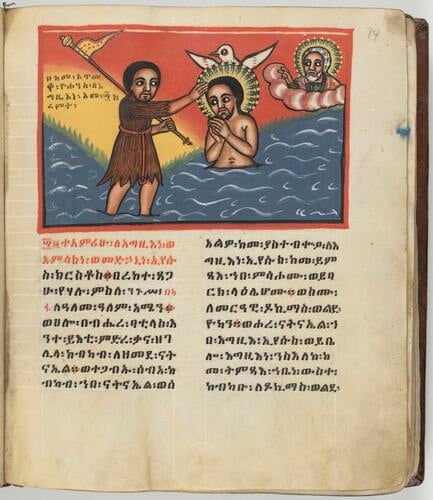
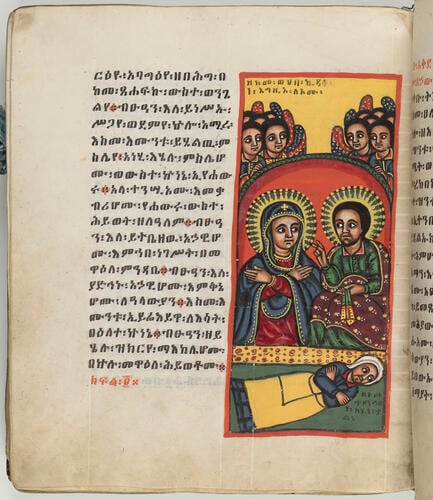
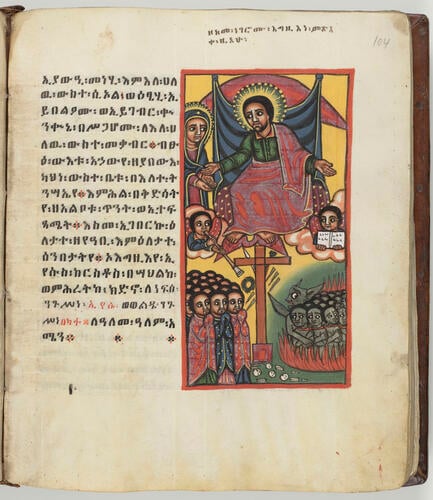
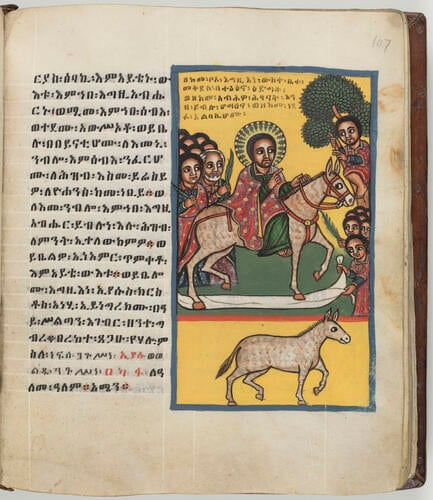
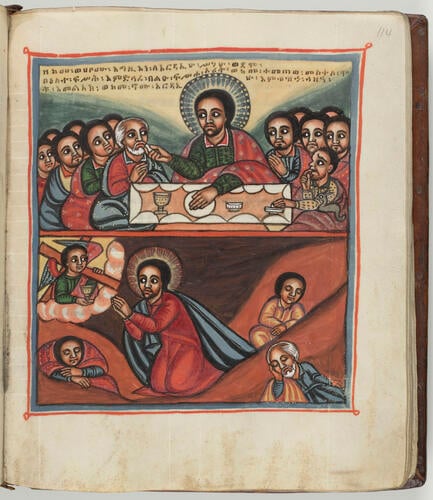
This manuscript contains the apocryphal biblical book of the Miracles of Jesus written in Ge‘ez, the ancient liturgical language of the Ethiopian church. Although it does not feature in the canonical text of the Bible, it has been accepted as an undisputed element of the Bible in its Ge‘ez translation. References to King Bakaffa (d.1730) support the hypothesis that the manuscript was copied in the early 18th century.
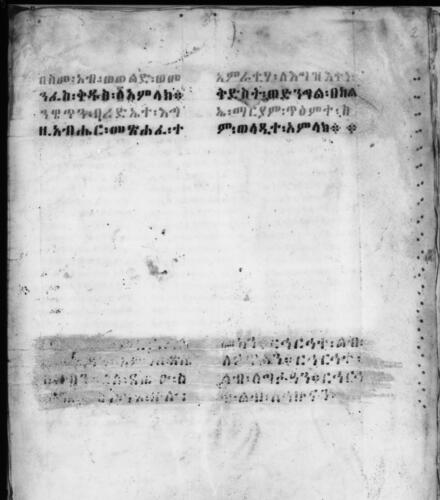
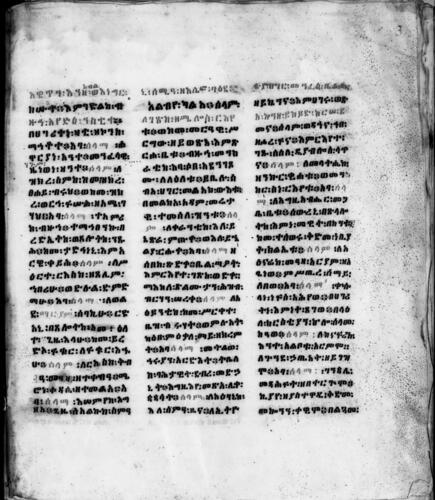
The Miracles of Jesus (ff.8-156, written in a large clear hand) consist largely of the Infancy Gospel of Thomas, describing the miracles that Jesus performed as a young child. This manuscript also includes the beginning of the Book of Miracles of the Virgin Mary (f.2); a hymn to Abba Salama, the 14th-century head of the Ethiopian Orthodox Church (ff. 3-6); and some of the Miracles of the Ethiopian Saint Abuna Takla Haymanot (ff. 156-59) – all later additions written in different hands.
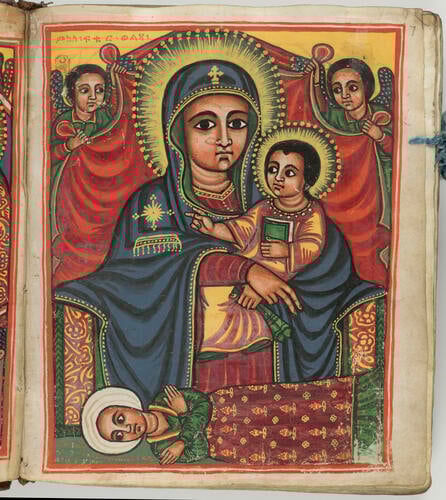
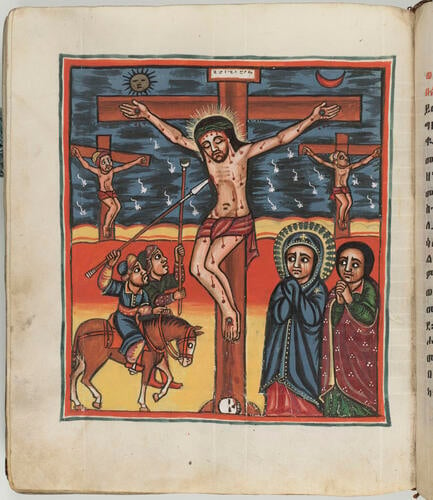
The manuscript opens with a full-page painting of the Trinity labelled ‘Father, Son, and Holy Ghost’ (f.6v) opposite a full-page picture of the Virgin and Child (f.7r). The figures prostrate below, a man and a woman, are most likely the manuscript’s patrons. The volume contains 61 other paintings, including a full-page representation of the crucifixion (f.121v).
This volume was among an estimated 1000 manuscripts acquired from churches across Ethiopia by Emperor Tewodros II (r.1855-68) for a new church and library at Maqdala, his fortress in northern Ethiopia. In April 1868, British forces led by Lieutenant General Sir Robert Napier laid siege to the fortress to secure the release of British hostages who were held there by Tewodros and he took his own life. His manuscripts, then stored in huts near his temporary church, were among the items taken and subsequently auctioned as spoils of war. Many of these (approximately 400) were bought by Richard Holmes, who had been sent by the British Museum as part of the Abyssinian Expedition to acquire antiquities and manuscripts in Ethiopia. Holmes presented 16 of the manuscripts to Queen Victoria, who retained six for the Royal Library (RCINs 1005079-1005084) and in 1869 offered ten back to the Trustees of the British Museum, which were transferred to the British Library in 1973.
Further reading
Edward Ullendorff, ‘The Ethiopic Manuscripts in the Royal Library, Windsor Castle’, Rassegna di Studi Etiopici 12 (1953), 71-79.
Binding description
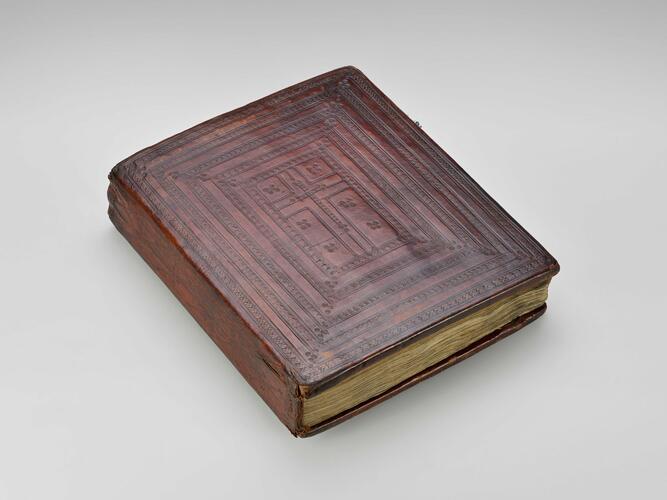
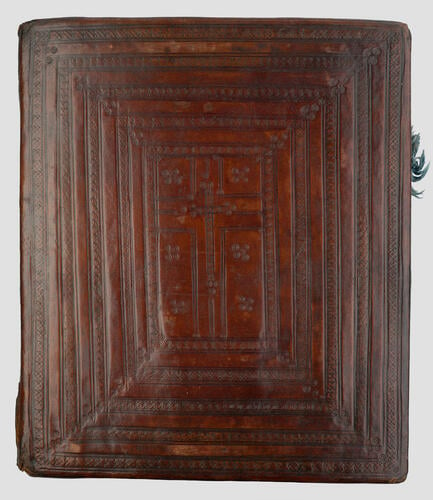
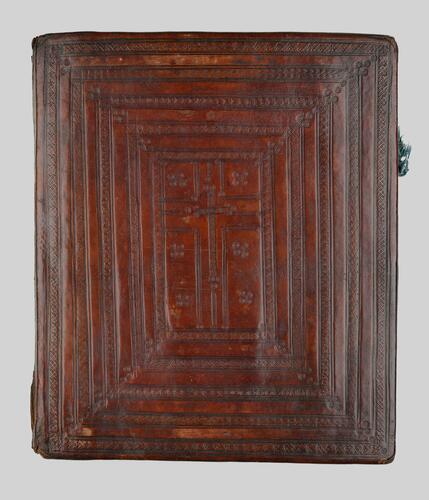
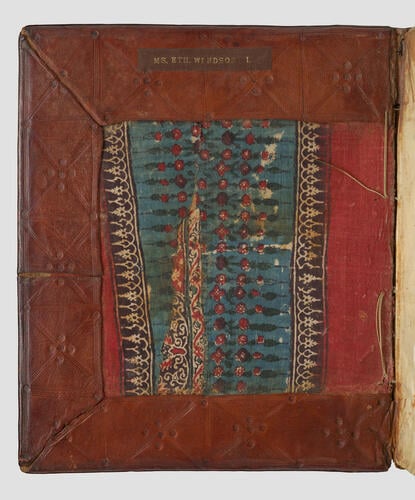
Ethiopia, 18th century. Wooden boards covered with blind-stamped rolls to form concentric border with a blind-stamped cross as centrepiece; inner covers with textile inlays. The manuscript was repaired by the India Office in the late 19th century.Provenance
Taken in the mid-19th century from an unknown Ethiopian church by Emperor Tewodros II (r.1855-68) for the Church of Madhane Alam at Maqdala; bought by Richard Holmes for the British Museum in 1868, and presented to Queen Victoria the same year.
-
Creator(s)
(nationality)Acquirer(s)
-
Medium and techniques
Ink and opaque watercolour on vellum
Measurements
34.5 x 29.5 cm (whole object)
Category
Object type(s)


